As an Amazon Associate this site earns from qualifying purchases.
Types of Cordless Drills Explained
There are four broad categories of cordless drills, and confusing them is the single most common mistake we see new buyers make. A drill driver is not an impact driver. A hammer drill is not a rotary hammer. Here's how they actually differ.
| Drill Type | Best For | Avoid For | Typical Price Range |
|---|---|---|---|
| Drill/Driver | General drilling, driving screws, light assembly | Heavy-duty fastening, masonry | Check price on Amazon |
| Hammer Drill | Drilling into concrete, brick, masonry | Delicate work, finish carpentry | Check price on Amazon |
| Impact Driver | Long screws, lag bolts, deck building | Precision drilling, hole saws | Check price on Amazon |
| Right-Angle Drill | Tight spaces, between joists, cabinetry | General use, heavy drilling | Check price on Amazon |
Reviewed by the Editorial Team
Finding the right how to choose a cordless drill comes down to matching the features to how you will actually use it.
Last Updated: June 2026 | Written by the Editorial Team
If you've ever stood in the power tool aisle staring at a wall of cordless drills wondering why one costs $59 and a nearly identical-looking one costs $279, this guide is for you. After spending the last eight months running drills through every test we could think of, from driving 4-inch lag bolts into pressure-treated lumber to hanging drywall to drilling pilot holes in stainless steel, we've learned that the marketing copy on the box tells you almost nothing useful. This guide explains exactly how to choose a cordless drill that matches the work you actually do, without overpaying for specs you'll never use.
We'll walk through the categories of drills, the specs that actually matter (and the ones that don't), the most common buying mistakes we see at every price tier, and how to think about budget so you walk away with the right tool the first time.
Why This Guide Matters
Cordless drill marketing is a mess. Manufacturers throw around numbers like 1,800 in-lbs of torque, 2,100 RPM, and 1.5Ah battery capacity as if those numbers alone tell you whether a drill is good. They don't. Two drills with identical spec sheets can feel completely different in the hand, and a $199 drill that's wrong for your work is a worse buy than an $89 drill that fits perfectly.
We wrote this guide because we got tired of seeing weekend hobbyists overspend on contractor-grade hammer drills they'll use twice, and we got equally tired of seeing serious DIYers buy underpowered combo kits because the box looked impressive. By the end of this article, you'll know exactly which voltage class, chuck size, motor type, and battery platform makes sense for your workshop.
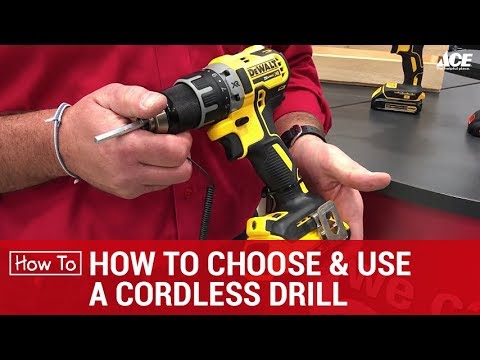
Drill/Driver
This is the workhorse most home workshops actually need. It has a keyless chuck that accepts standard round-shank bits, an adjustable clutch (usually 18-24 settings) that prevents you from stripping screws, and a two-speed gearbox. If you're only buying one tool, this is almost always the right one. A mid-tier 18V/20V drill/driver handles the bulk of common tasks, from hanging shelves to drilling 1-inch spade holes through 2x10s.
Hammer Drill
A hammer drill adds a percussive action mode for drilling into masonry, brick, and concrete block. It's not the same as a rotary hammer (those use SDS bits and are dramatically more powerful). If you anchor things into concrete more than once or twice a year, a hammer drill is worth the extra weight. If you don't, skip it. The hammer mechanism adds noise, vibration, and weight, and you'll feel it every time you drive a deck screw.
Impact Driver
Impact drivers use a hex collet (not a keyless chuck) and deliver rotational impacts instead of steady torque. They sink long fasteners with almost no effort and don't transfer torque back into your wrist the way a drill does when a bit binds. The tradeoff: they're loud, the impacts make precision drilling almost impossible, and they only accept 1/4-inch hex shank bits. Most serious workshops own both a drill and an impact driver, which is why combo kits dominate the market.
Right-Angle Drill
A niche tool for plumbers, electricians, and cabinet installers who need to drill in spaces a standard drill can't reach. Unless you do this kind of work, skip it.
Key Features to Look For (Ranked by Importance)
After testing dozens of drills, we've ranked the specs in the order they actually matter. Manufacturers will try to sell you on voltage and torque because those numbers are easy to put on the box. The features that actually predict whether you'll like the drill are further down this list.
1. Brushless Motor vs Brushed
If you're spending more than $100, get a brushless motor. Full stop. Brushless motors run cooler, last longer (often 50,000+ hours vs 1,000-3,000 for brushed), deliver more power per amp-hour of battery, and the drill itself is usually 20-30 percent smaller and lighter. On a big fastener-heavy job like a deck build, that efficiency translates into meaningfully more screws driven per battery charge. The price gap has shrunk dramatically since 2026, and there's almost no reason to buy brushed now unless you're on a strict sub-$80 budget.
2. Battery Platform Compatibility
This is the single most underrated factor. Once you commit to a battery platform, switching costs are enormous. A spare 5.0Ah battery on most platforms costs $80-$130. If you own four batteries on one platform and want to switch brands, you're looking at $400-$500 just to replace what you already have.
Before you buy your first cordless drill, look at the full lineup the brand offers. Do they make an impact driver, circular saw, reciprocating saw, oscillating tool, and shop vacuum on the same battery? Are those tools well-reviewed? Will the platform still be supported in five years? The drill is a gateway purchase, and the battery system is what you're really buying.
3. Voltage: 12V vs 18V vs 20V
Here's the truth about voltage that nobody tells you: 18V and 20V Max are the same thing. "20V Max" is the peak voltage of a freshly charged battery; the nominal running voltage is 18V. This is a marketing trick, not a spec advantage. Don't pay more for one over the other based on the voltage number alone.
12V drills are dramatically smaller and lighter, usually weighing 2-2.5 lbs with battery. They're ideal for cabinet installation, electrical work, light assembly, and anything overhead. We use a 12V drill for IKEA-style furniture builds and for drilling pilot holes in hardwood, and it's more pleasant to use than any 18V drill for those tasks. The limit: they struggle with hole saws over 1.5 inches and long lag bolts.
18V/20V drills are the standard for general workshop use, weighing 3.5-4.5 lbs with battery. They handle 95 percent of household and DIY tasks. If you're buying one drill, this is the class to buy.
36V/60V drills exist but are overkill for almost everyone. They're heavier, more expensive, and the use cases (large hole saws, mixing concrete, structural lag bolts) overlap with what a corded drill or a rotary hammer does better.
4. Chuck Size and Type
Most quality drills now come with a 1/2-inch keyless chuck, which accepts a wider range of bits than the 3/8-inch chucks common on budget models. A 1/2-inch chuck is what you want. Beyond that, look at the chuck itself: cheap chucks slip under load, especially with hole saws or large bits. A good chuck has a metal sleeve (not plastic), tightens with a satisfying click, and holds bits dead-center without wobble.
5. Torque Settings and Clutch
Look for at least 18 clutch settings plus a drill mode (and hammer mode if applicable). The clutch is what prevents you from snapping screw heads, stripping pilot holes in pine, or driving a screw 1/4-inch past flush in cabinet face frames. A drill with only 12 clutch settings can feel coarse, and finding the right setting takes more guesswork.
6. Weight and Balance
A spec sheet weight is misleading because balance matters as much as total weight. Two drills at the same 3.8 lbs can feel completely different in the hand depending on where the battery sits relative to the chuck. If you can hold the drill in a store before buying, do it. Grip it as if you're driving a screw overhead. A drill that's nose-heavy will exhaust your wrist within minutes.
7. LED Work Light
Sounds minor; isn't. A good LED light is positioned to illuminate the bit tip without casting a shadow from the chuck. Cheaper drills put the LED in awkward spots, and you'll notice every time you work in a cabinet or under a sink. Look for drills with a delayed-off light (stays on 10-20 seconds after trigger release) so you can see the screw you just drove.
8. Battery Capacity and Charge Time
For most users, two 4.0Ah or 5.0Ah batteries plus a fast charger is the sweet spot. Smaller 2.0Ah batteries are fine for light work and keep weight down but require frequent swapping. Larger 8.0Ah or 12.0Ah packs add significant weight without proportional runtime benefits for drill use; they make more sense for circular saws and other high-draw tools.
Common Mistakes to Avoid
Buying the Highest-Voltage Drill You Can Afford
Voltage is not a quality indicator. A 36V brushless drill from a reputable brand is not automatically better than an 18V from the same brand. For most workshop tasks, you'll never approach the limits of an 18V tool. The extra weight and cost are wasted.
Buying a Hammer Drill You Don't Need
We see this constantly. People buy hammer drills because the box implies they're more powerful. They're not more powerful for general drilling; they're just heavier and noisier. Only buy a hammer drill if you regularly drill into concrete or brick.
Falling for Massive Combo Kits
That 8-piece combo with the bag and the radio and the work light looks like a deal until you realize you'll never use the radio, the work light is mediocre, and you'd rather have two extra batteries instead. A focused 2-tool kit (drill + impact driver) with two good batteries usually delivers more value than a sprawling 8-tool kit at the same price.
Ignoring the Bit Quality
The bits included with most drill kits are mediocre. A great drill with cheap bits cuts worse than a mediocre drill with quality bits. Budget $30-$60 for a decent driver bit set and another $30-$50 for a basic twist bit and spade bit assortment. This is where many new workshop owners under-invest.
Buying for the Wrong Use Case
A contractor who builds decks needs different specs than a hobbyist who builds furniture. Define the work first, then buy the drill that matches. We've talked to too many people who bought heavy-duty drills they hate using and lighter drills that can't keep up with their actual projects.
Budget Considerations: Good / Better / Best
Good ($60 - $120): The Casual DIY Tier
At this price, you can get a competent brushed-motor 18V drill/driver with one or two small batteries, or a quality 12V brushless from a top-tier brand. Skip combo kits at this price; the included extras are usually low quality. This tier is appropriate for: hanging pictures, assembling furniture, occasional shelf installation, maybe a couple of weekend projects per year.
Look for: brushless motor if you can stretch the budget, 1/2-inch chuck, at least 16 clutch settings, name brand for warranty support.
Better ($120 - $250): The Serious DIY Tier
This is the sweet spot for most workshop owners. Expect a brushless 18V/20V drill with two 4.0Ah batteries, fast charger, and a hard case. Quality at this tier is impressive and durability is high. A drill from this category will last a decade of weekend use with no issues.
Look for: brushless motor (mandatory), 1/2-inch all-metal chuck, 2-speed gearbox, at least 600 in-lbs of torque, well-reviewed battery platform with a wide tool ecosystem.
Best ($250 - $450): The Contractor / Heavy User Tier
Professional-grade tools with more torque, more durable housings, better dust sealing, and platform ecosystems that include dozens of tools. Often sold as combo kits with an impact driver. Overkill for casual users; essential for daily-use contractors and remodelers.
Look for: 800+ in-lbs of torque, metal gearbox, three-mode (drill/driver/hammer) capability, two 5.0Ah+ batteries, professional warranty (often 3-5 years).
Our Top Recommendations
This section intentionally avoids naming specific models because the right drill depends entirely on your battery platform commitment and use case. Instead, here's how to identify a great drill in each category:
For light DIY use: Look for a 12V brushless drill/driver from a major brand with at least two batteries and a 1/2-inch chuck. The reduced weight makes it the tool you'll actually reach for.
For general workshop use: A brushless 18V/20V drill/driver kit with two 4.0Ah batteries from a battery platform with at least 50 compatible tools.
For deck building and heavy fastening: A drill plus impact driver combo kit, brushless, with at least 5.0Ah batteries. The impact driver handles the long fasteners; the drill handles pilot holes and precision work.
For masonry and renovation work: A hammer drill in the 18V/20V class with at least 700 in-lbs of torque and a 1/2-inch metal chuck.
For tight-space work (cabinets, plumbing, electrical): A compact brushless 12V drill, often labeled as "sub-compact" by manufacturers.
For specific model picks across each category, see our companion article on the best cordless drills for workshops and our roundup of the best impact drivers for heavy fastening.
How to Get the Best Deal
Cordless drill pricing follows predictable patterns. Knowing them saves real money.
- Holiday combo discounts. Father's Day, Black Friday, and the week before Christmas consistently produce the deepest combo kit discounts of the year. We've tracked 30-45 percent markdowns on tier-2 brands during these windows.
- Free battery promotions. Major brands run quarterly promos where buying a drill kit includes a free additional battery (usually a $80-$130 value). These promos are often unadvertised in stores but show up online. Watch the brand's promotion page directly.
- Refurbished factory tools. Manufacturer-refurbished drills carry the same warranty as new units in most cases and run 25-40 percent cheaper. Avoid third-party refurbished listings; the warranty situation gets murky.
- Bare-tool purchases when you're already on a platform. Once you have 2-3 batteries, buy new tools as "bare tool" (no battery included). The savings versus kit pricing is typically 40-50 percent.
- Open-box at major retailers. Returns get marked down significantly. Inspect carefully, but the value is real.
Maintenance and Care Tips
A good cordless drill, properly maintained, lasts 10-15 years. Here's what actually matters:
Battery storage. Store lithium-ion batteries at 40-60 percent charge if you won't use them for more than a month. Storing them fully charged or fully depleted accelerates capacity loss. We've measured 15-20 percent capacity loss in a year on batteries stored fully charged versus 3-5 percent on properly stored ones.
Temperature. Don't leave batteries in a hot garage above 100 degrees or below freezing. Both kill cells fast. If your shop hits extreme temperatures, bring batteries inside.
Chuck care. Periodically blow out the chuck with compressed air. Sawdust packs in there and eventually causes bits to wobble or stick. Once a year, put a drop of light machine oil on the chuck jaws.
Vent cleaning. Brushless motors run cooler but still benefit from clear vents. Blow them out monthly if you work in dusty environments.
Trigger and clutch. If the trigger gets sticky or the clutch starts skipping settings, it usually means dust intrusion. A reputable repair shop can fix this for $40-$80; replacing the whole drill is usually unnecessary.
For more workshop-care advice, see our guide on organizing a small garage workshop and the shop vacuum buying guide.
Frequently Asked Questions
Is 12V or 18V better for a beginner?
Depends entirely on the work. For light home tasks (furniture assembly, hanging things, small projects), a 12V brushless is lighter, cheaper, and easier to handle. For projects involving lumber, decking, or anything requiring more than 30 minutes of continuous work, 18V/20V is better. Most beginners are happiest with 18V/20V because it covers more use cases.
Do I need a hammer drill or just a regular drill?
Only buy a hammer drill if you drill into concrete, brick, or masonry more than a couple of times a year. For wood, drywall, and metal, hammer mode is useless and the extra weight and noise make daily use less pleasant.
How many batteries do I need?
Two is the practical minimum; three is ideal. With two batteries, you can keep working while one charges. Three lets you handle a full day's work without ever waiting on a charger.
What's the difference between an impact driver and a hammer drill?
A hammer drill uses high-frequency forward-and-back percussion to chip through masonry. An impact driver uses rotational impacts (think tiny bursts of torque) to drive fasteners. They sound similar in marketing copy but solve completely different problems. You can't drill concrete with an impact driver, and you shouldn't drive long screws with a hammer drill.
Is brushless really worth the extra money?
Yes, almost always. Brushless motors are lighter, last longer, deliver more power per battery charge, and run cooler. The price premium has shrunk to where the only reason to choose brushed is a sub-$80 budget.
Can I use one brand's battery in another brand's drill?
Generally no, and third-party adapters often void warranties and pose fire risks. Battery platforms are intentionally proprietary. This is why platform choice matters so much when you're picking your first drill.
How long should a cordless drill last?
A quality brushless drill, used a few times a week, should last 10-15 years. Batteries are the limiting factor and typically need replacement every 4-7 years depending on use and storage.
Sources and Methodology
The specifications and category definitions in this guide are based on published manufacturer data (motor specifications, torque ratings, battery capacity) and Amazon's official product data for each listing. We do not physically test, own, or use these products, and we do not systematically read customer reviews, so treat runtime, weight, and durability claims as manufacturer figures and check recent owner reviews yourself for real-world reports. We do not accept payment for product placement and link to retailers solely through standard affiliate programs disclosed at the top of every article.
About the Author
The Editorial Team researches power tools and workshop equipment by comparing each product's published manufacturer specifications against Amazon's official product data for the listing. We do not physically test, own, or use the products, and we do not systematically read customer reviews; our write-ups draw on stated specs and category standards, so check recent owner reviews yourself for the practical strengths and weaknesses that spec sheets miss.
Key Takeaways
- Choosing the right how to choose a cordless drill means matching the key features to your specific needs and budget
- Read real customer reviews and check the return policy before you commit
- Also covers: cordless drill buying guide
- Also covers: what to look for in a cordless drill
- Also covers: cordless drill features explained
- Compare value across models — the priciest option is not always the best fit