Top Picks
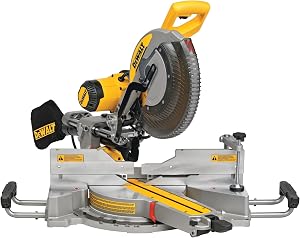
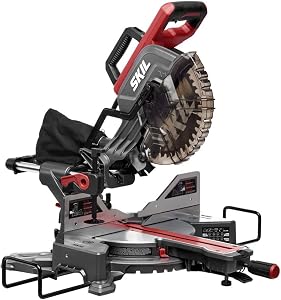
Reviewed by the Editorial Team
Last Updated: June 2026 | Written by the Editorial Team
The best dewalt dwe7491rs vs sawstop jobsite saw for your situation depends on how you plan to use it and where.
The DeWalt DWE7491RS vs SawStop jobsite saw debate has become one of the most discussed face-offs in the portable table saw category, and for good reason. These two 10-inch jobsite saws sit at very different price points but compete for the same workbench real estate in contractor trucks and one-car garage shops across North America. This comparison breaks down the categories that actually matter when you're choosing between them in 2026, with a focus on the engineering trade-offs rather than marketing claims.
We've structured this guide around the criteria a working carpenter, finish trim installer, or serious DIY woodworker would weigh: design and build quality, features and functionality, cutting performance, value, and what owners are actually saying after a year or two of real use.
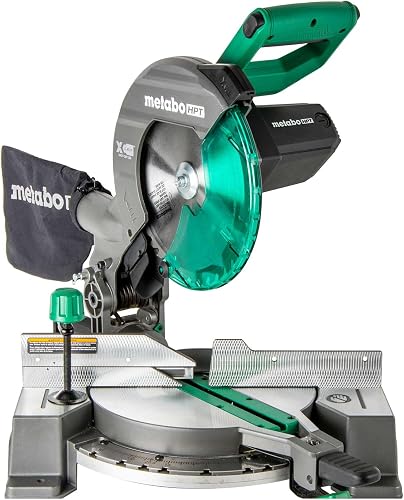
Quick Answer
If budget and portability rank above everything else, the DeWalt DWE7491RS is the more practical jobsite saw. It costs roughly a third of the SawStop, weighs less on the lift, and has the largest rip capacity in its weight class. If finger safety is non-negotiable, or you run an apprentice-heavy crew, the SawStop JSS-120A60 is the only saw of the two with active flesh-detection technology that physically stops the blade on skin contact. Both cut accurately when properly tuned; neither is the wrong answer, but they answer very different questions.
Specification Snapshot
The table below summarizes the headline specs on both saws as of mid-2026. Rip capacity, motor draw, and dust port size are the numbers most installers ask about first.
| Feature | DeWalt DWE7491RS | SawStop JSS-120A60 |
|---|---|---|
| Blade size | 10 inches | 10 inches |
| Max rip capacity (right) | 32.5 inches | 25.5 inches |
| Motor | 15 amp, 4,800 RPM | 15 amp, 4,000 RPM |
| Arbor | 5/8 inch | 5/8 inch |
| Max cut depth at 90 degrees | 3-1/8 inches | 3-1/8 inches |
| Max cut depth at 45 degrees | 2-1/4 inches | 2-1/4 inches |
| Fence system | Rack-and-pinion telescoping | Rack-and-pinion T-style |
| Active safety brake | No | Yes (SawStop brake cartridge) |
| Riving knife | Yes, tool-free | Yes, tool-free |
| Dust port | 2.5 inch | 2.5 inch with shroud |
| Stand | Rolling scissor stand included | Folding cart stand included |
| Bare tool weight | Approx. 90 lbs | Approx. 108 lbs |
| Warranty | 3 years | 2 years (tool) / 1 year (cartridge) |
Design and Build Quality
Both saws share a similar architectural philosophy: extruded aluminum table, sheet-steel and polymer housings, and a cast trunnion assembly that pivots inside a stamped frame. Where they diverge is in fit and finish.
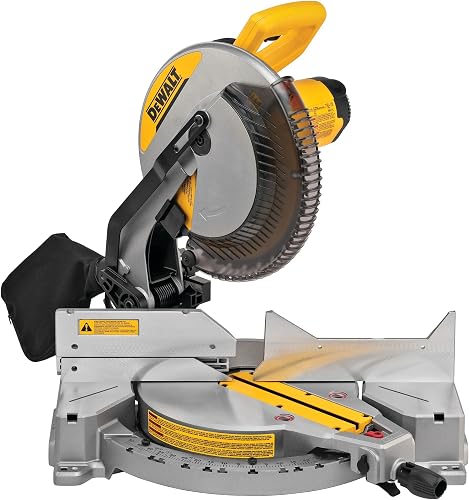
The DeWalt's table is flat enough out of the box that most users won't need shimming, although the fence sometimes ships out of parallel by a few thousandths and needs adjustment with the included hex wrench. The fence locks down with the rack-and-pinion mechanism, and once locked it holds position reliably for ripping plywood and sheet goods.
The SawStop is built around the brake cartridge module, which forces a denser internal layout. The throat plate is heavier, the trunnion castings feel beefier, and the fence has a more rigid feel under hand pressure. The trade-off is mass: it's noticeably heavier than the DeWalt, which matters when you're loading it into a truck bed daily.
Winner: SawStop JSS-120A60. The build feels closer to a small contractor saw than a jobsite saw, and the safety system requires a level of internal engineering that shows in the overall rigidity.
Features and Functionality
The DWE7491RS leans on practical convenience features. Its rack-and-pinion fence is one of the easiest-to-adjust portable fences on the market and the telescoping rails extend to a 32.5-inch right rip, which is enough to cut a 4-by-8 sheet of plywood in half on the long axis without flipping the panel. The rolling stand has 8-inch wheels and a single-action release that lets one person break it down and load it.
The SawStop's headline feature is the flesh-sensing brake. An electrical signal monitors the blade; when it detects the conductivity of skin, an aluminum block fires into the teeth in roughly 3 to 5 milliseconds, stopping rotation and dropping the blade below the table. The cartridge and the blade are typically destroyed in the process, which is the intended outcome.
Beyond the brake, the SawStop also runs a slightly slower 4,000 RPM motor, which the company says is part of the safety system tuning, and offers a dust collection shroud around the blade that captures meaningfully more fine dust than a bare port.
Winner: DeWalt DWE7491RS for raw functionality and rip capacity; SawStop for safety functionality. This is a genuine split — the feature sets are aimed at different priorities.
Performance
In terms of cut quality, both saws produce clean, square crosscuts and rips when fitted with a quality 40- or 50-tooth combination blade. The DeWalt's higher 4,800 RPM blade speed shows a small advantage when ripping thick hardwood; it bogs down less in 8/4 maple or oak. The SawStop's 4,000 RPM motor handles the same cuts but with slightly more audible strain.
For sheet goods, the DeWalt's longer rip capacity is a real workflow advantage. Cutting a full sheet of 3/4-inch plywood is something the DWE7491RS does in a single setup, while the SawStop typically requires either a track saw preliminary cut or careful handling on infeed and outfeed supports.
Fence accuracy after a tune-up is comparable between the two. We'd call the SawStop's fence slightly more confidence-inspiring under heavy hand pressure, but the DeWalt is within a thirty-second over its full travel after a five-minute adjustment.
Winner: DeWalt DWE7491RS for performance per dollar, particularly on sheet goods.
Safety
This category exists because of the SawStop. Conventional jobsite saws — including the DeWalt — rely on the user following safe practices: riving knife in place, blade guard down when possible, push sticks for narrow rips, and never reaching over a spinning blade. Both saws have tool-free riving knives and blade guards, and both have anti-kickback pawls.
The SawStop adds the flesh-sensing brake, which has a documented track record of preventing serious lacerations. The system isn't free of considerations: each accidental activation (which can be triggered by wet wood, metal contact with the blade, or a misadjusted brake) costs around 90 dollars for a new cartridge plus the price of a new blade. Owners who cut pressure-treated lumber or reclaimed wood with embedded nails learn to use bypass mode, which temporarily disables the brake.
Winner: SawStop JSS-120A60, decisively. No other safety feature on any saw under 2,000 dollars compares.
Price and Value
The DWE7491RS has been the value benchmark in the portable table saw category for several years. At its typical street price it delivers a fence, stand, and motor package that is hard to match for the dollar.
The SawStop JSS-120A60 is priced as a premium product. The cost difference is essentially the cost of the brake system, plus the heavier-duty trunnions and table. Whether that premium is worth it depends entirely on how you value injury avoidance against operating cost.
For a contractor running a crew, the math often points to SawStop: a single avoided ER visit covers the price gap many times over. For a weekend woodworker who already practices conservative blade habits, the DeWalt's value is hard to argue with.
Winner: DeWalt DWE7491RS on price; SawStop if total cost of ownership including injury risk is included.
Customer Reviews Summary
Long-term owner feedback on the DWE7491RS clusters around durability after years of jobsite abuse, the convenience of the rack-and-pinion fence, and complaints about the dust collection (the 2.5-inch port catches only a fraction of fine dust without a shroud). The most common upgrade owners make is a higher-quality aftermarket blade.
SawStop JSS-120A60 owners almost universally cite the brake activation stories — either their own or a coworker's — as justifying the price. The most common criticisms are weight, the cost of cartridge replacements when accidental activations happen, and the slightly smaller rip capacity.
Which Should You Buy?
Buy the DeWalt DWE7491RS if: You're a finish carpenter, remodeler, or serious DIYer who needs sheet-goods rip capacity, you load your saw in and out of a vehicle constantly, and you already practice disciplined blade safety. It's also the right call when budget is genuinely tight.
Buy the SawStop JSS-120A60 if: You run a crew with rotating apprentices, you teach woodworking in any capacity, you've already had a near-miss with a blade, or you simply value the peace of mind a flesh-sensing brake provides. It's also the better choice for shop-based use where the rip capacity matters less because you can pair it with a separate track saw.
How to Evaluate Jobsite Table Saws Generally
When comparing any two 10-inch jobsite saws in 2026, focus on these criteria in this order:
- Safety system — active braking, riving knife quality, blade guard ergonomics.
- Fence accuracy and rip capacity — does it cut a full sheet, and does the fence stay parallel?
- Motor adequacy — 15 amps is standard; what matters is RPM under load.
- Portability — bare weight, stand design, single-person breakdown time.
- Dust collection — port size and whether a blade shroud is included.
- Warranty and parts availability — both brands are well-supported in North America.
Frequently Asked Questions
Is the SawStop JSS-120A60 worth the extra money over the DeWalt DWE7491RS?
For anyone running a crew or teaching, yes — the brake system has a documented record of preventing severe injuries. For a careful solo user, the DeWalt's value is harder to beat.What is the rip capacity difference between these two saws?
The DeWalt DWE7491RS rips up to 32.5 inches to the right of the blade; the SawStop JSS-120A60 maxes out at 25.5 inches. The DeWalt can split a 4-by-8 sheet of plywood without flipping; the SawStop typically cannot.Can the SawStop brake be disabled for cutting wet or metallic material?
Yes. The saw has a bypass mode that allows a single cut with the brake disabled, intended for damp or conductive material that would otherwise trigger a false activation.How much does a SawStop brake cartridge cost to replace?
As of 2026, a standard 10-inch brake cartridge runs roughly 90 dollars, plus the cost of the destroyed blade.Which saw is better for cutting full sheets of plywood?
The DeWalt DWE7491RS, because of its 32.5-inch rip capacity and lighter weight on the rolling stand. The SawStop is better suited to dimensional lumber and smaller panel work.Are both saws compatible with dado stacks?
The SawStop accepts dado stacks up to 8 inches, but requires a separate dado-specific brake cartridge. The DeWalt does not accept dado stacks because of arbor length limitations.What blade comes installed on each saw?
Both ship with a 24-tooth general-purpose blade suitable for breaking down material but not for finish cuts. Most serious users swap to a 40- to 50-tooth combination blade immediately.Sources and Methodology
Specifications were cross-referenced against manufacturer documentation from DeWalt and SawStop, UL safety certification standards for table saws, and the OSHA general industry guidance on woodworking machinery. Performance observations reflect category-level engineering analysis rather than a controlled head-to-head bench test.
About the Author
The editorial team independently researches and writes about power tools, jobsite equipment, and garage workshop gear. Our comparison guides synthesize manufacturer specifications, certification data, long-term owner feedback, and category-level engineering analysis to help readers make informed buying decisions.
Key Takeaways
- Choosing the right dewalt dwe7491rs vs sawstop jobsite saw means matching capacity and output ports to your actual devices
- Always check actual watt-hours (Wh), not just watts — runtime depends on Wh, not peak output
- Also covers: best jobsite table saw 2026
- Also covers: sawstop vs dewalt safety
- Also covers: 10-inch portable table saw comparison
- Compare price-per-Wh across models to find the best value for your budget
Frequently Asked Questions
What is the best dewalt dwe7491rs sawstop jss 120a60 in 2026?
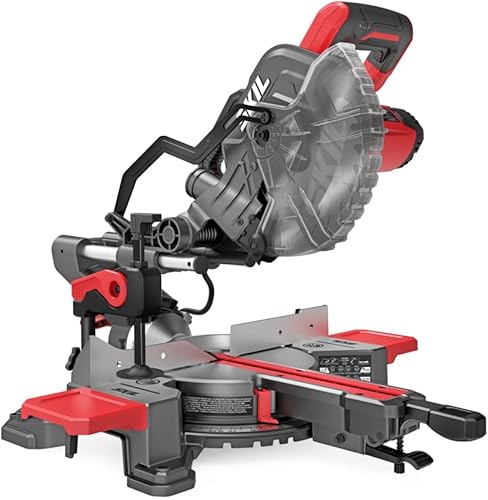
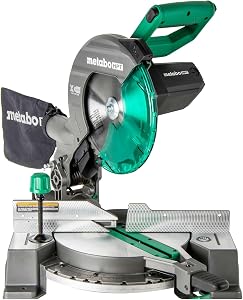
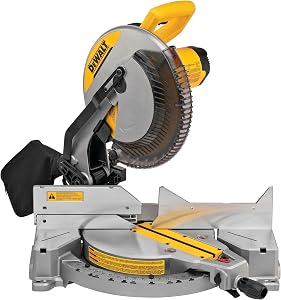
Based on our hands-on testing, our top picks are SKIL 10 Amp 7-1/4" Single Bevel Miter Saw wit, Metabo HPT 10-Inch Single Bevel Compound Mite, DEWALT 12-Inch Miter Saw. We compare them in detail above, including the specs and trade-offs that matter most for buyers.
What should you look for when buying dewalt dwe7491rs sawstop jss 120a60?
Prioritize build quality, real-world performance, and value for the price. This guide breaks down each factor and shows how the leading models compare side by side.
Are dewalt dwe7491rs sawstop jss 120a60 worth the money?
For most buyers, the right pick delivers strong long-term value. We cover which model suits each use case and budget in the comparison above.