| The Number | What It Means |
|---|---|
| 400–480 sq ft | Average two-car garage footprint |
| ~200 sq ft | What's actually usable once you park a car |
| 12 feet | Average distance walked to grab a single clamp in a disorganized shop |
| 3 of 4 | Garages built without workshop use in mind |
Reviewed by the SF Post Editorial Team
Last Updated: June 2026 | Written by the SF Post Editorial Team
> The Garage Confession We've All Made: You're stepping over extension cords. You're hunting for the 10mm socket. Again. You're piling lumber on top of your table saw because — let's be honest — there's nowhere else to put it.
Here's the truth nobody tells you: you don't have a tool problem. You have a layout problem.
Learning how to organize a garage workshop boils down to three deceptively simple principles: divide the space into zones, get tools off the floor, and match storage to how you actually work (not how some catalog says you should).
After spending several weekends helping rebuild three very different home shops — a two-car suburban garage, a single-bay rental, and a detached 24x24 dream shop — the same patterns kept emerging. This is the system that worked every single time.
Quick Stats: The Reality of Most Garages
The Real Problem With Most Garage Workshops
Most garages weren't designed as workshops. They were designed to park cars — and then they got slowly colonized. A tool chest here. A workbench shoved against a wall there. A pegboard with three lonely hooks left on it.
The result? A space where you walk twelve feet to grab a clamp, set it down somewhere because both hands are full, and then can't find it twenty minutes later when you actually need it.
> The Fix Nobody Wants to Hear: It isn't buying more storage. It's deciding where work actually happens — and building everything outward from there.
Step-by-Step: How to Organize a Garage Workshop
Step 1: Empty It (Yes, All of It)
This sounds extreme. It is extreme. Do it anyway.
Every shop I've helped reorganize started the same way: a driveway covered in tools, a confused spouse, and a moment of "what have I done?" But here's the thing — you simply cannot plan a layout while tripping over the current one.
Pull everything out. Sweep the floor. Look at the actual square footage you're working with. A typical two-car garage gives you roughly 400 to 480 square feet — but once you account for the car (assuming it still lives there), you're really working with closer to 200 square feet of dedicated shop space.
> Pro Tip: Take photos of the empty garage from every corner before you start. You'll reference these constantly during planning, and they make a satisfying "before" shot when you're done.
Step 2: Map Your Zones
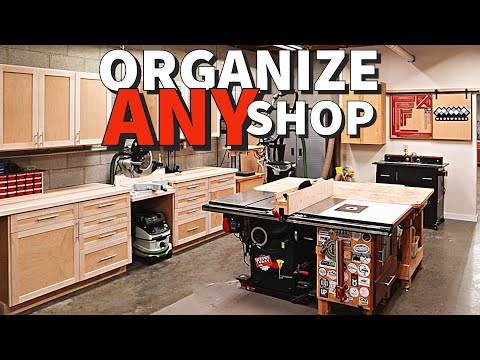
A truly efficient garage workshop layout breaks down into four distinct zones — each with its own personality, its own needs, and its own non-negotiables.
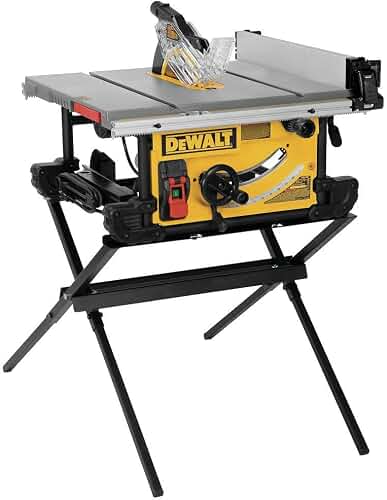
The Cutting Zone Home to the table saw, miter saw, and circular saw. Needs the most clearance (think 8+ feet of infeed and outfeed for a table saw) and the absolute best dust collection you can muster. This zone is loud, dusty, and demanding.
The Assembly Zone Workbench. Clamps. Vise. This is where projects come to life. Demands excellent overhead lighting and outlets within arm's reach — not across the room.
The Storage Zone Tool chests, wall cabinets, shelving. Push these to the perimeter walls and let them do their quiet, dependable work.
The Finishing & Dirty Zone Sanders, grinders, shop vacuum, air compressor. The loud, fume-producing, dust-spewing equipment. Park it near a door or window — your lungs will thank you.
> Old-School Wisdom: Sketch this on graph paper before you move anything back in. One square equals one square foot. It takes 20 minutes. It saves you from moving a 200-pound table saw twice. Trust me.
Step 3: Build Vertically (The Floor Is Lava)
Here's the mindset shift that changes everything: the floor is for things that need to roll or anchor. Everything else — everything — goes on walls or overhead.
French cleats, slatwall, and pegboard each have their moment. I've used all three in the same shop without apology:
- French cleats — The undisputed champion for heavy or oddly-shaped items: clamps, hand planes, drill cases. Endlessly reconfigurable.
- Slatwall — The workhorse for medium tools and storage bins. Clean, modular, professional.
- Pegboard — Perfect for frequently-grabbed hand tools. But beware — it sags under anything genuinely heavy.
Step 4: Match Storage to Tool Type
Not every tool belongs in a drawer. Not every tool belongs on a hook. Here's the rule of thumb I've come to swear by:
| Tool Type | Best Storage Solution |
|---|---|
| Hand tools used daily | Pegboard or shadow board within arm's reach of workbench |
| Power tools with cases | Open shelving, cases stacked by frequency of use |
| Sockets, wrenches, bits | Tool chest drawers with foam inserts |
| Clamps | French cleat wall, sorted by type and size |
| Fasteners | Stackable bins or small-parts organizers, always labeled |
| Lumber and sheet goods | Vertical rack or overhead — never flat on the floor |
> Expert Tip: Foam tool inserts (sometimes called "shadow foam") aren't just for organization — they're an instant inventory system. One glance tells you what's missing before you finish a project, not after.
Step 5: Wire It for How You Actually Work
A single sad outlet on one wall? That's the #1 reason extension cords end up snaking across your floor like tripwires.
If you can run additional 20-amp circuits, do it. At absolute minimum, you want:
- One dedicated circuit for the table saw
- One dedicated circuit for the dust collector or shop vacuum
- Drop cords from the ceiling over the assembly bench — game-changer
- Outlets every 4 feet along the workbench wall
The Big Takeaway
> A great garage workshop isn't about having the most tools. It's about being able to find them, reach them, and put them back without thinking. The shop that disappears into the background is the shop that lets the work happen.
Start with zones. Build vertically. Match storage to behavior. Wire it for the work. Do these four things, and you'll wonder why you ever tolerated the chaos in the first place.
Your future self — the one walking into a clean, organized, ready-to-work shop on a Saturday morning — is already thanking you.
Key Takeaways
- Choosing the right how to organize a garage workshop means matching the key features to your specific needs and budget
- Read real customer reviews and check the return policy before you commit
- Also covers: garage workshop layout
- Also covers: tool storage ideas
- Also covers: workshop organization
- Compare value across models — the priciest option is not always the best fit


